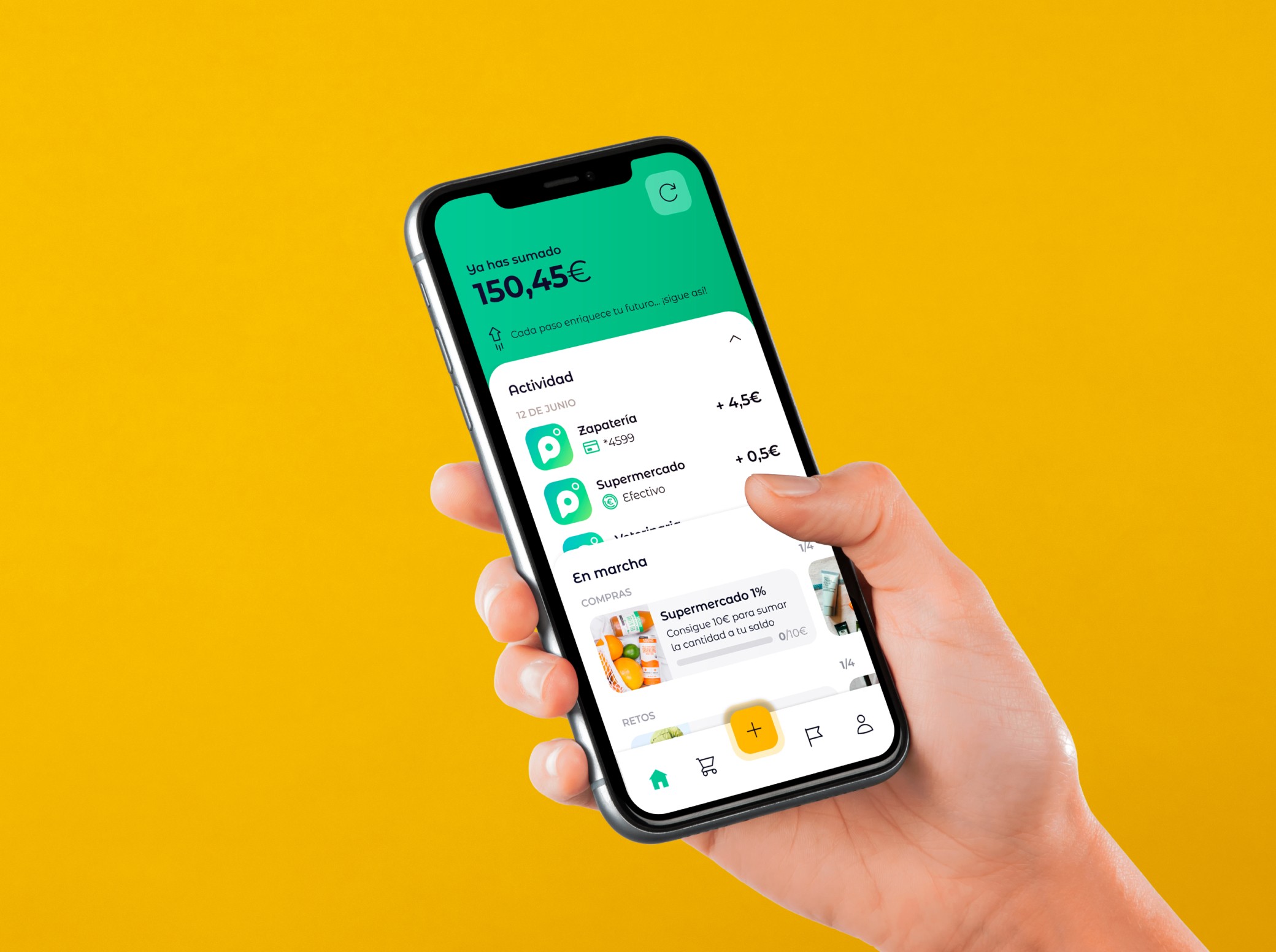
The relationship between people and money is one of the most constant and complex in everyday life.
Banking, as a primary financial instrument, is part of daily decisions that affect people’s stability, opportunities, and sense of trust.
In recent years, digitalisation, the emergence of new players, and changing customer expectations have profoundly transformed this relationship.
In this context, the challenge for financial institutions is not only to offer products, but to design services and experiences that make money management clearer, more accessible, and more trustworthy.
Strategic design helps address this complexity by rethinking how financial services are structured, how they are communicated, and how they are experienced in everyday life.
This means rethinking customer experience in banking, the design of digital financial services, and the way people make decisions about their money.
Challenges and pain points in the banking sector
Financial institutions operate in a context where business complexity directly impacts people’s experience:
In banking, experience is not occasional: it is cumulative.
Every interaction shapes the perception of trust and the long-term relationship.
What can strategic design bring to the banking sector?
The main challenge in banking today is not only to digitalise, but to make financial complexity understandable and usable.
Strategic design makes it possible to address this challenge through an integrated approach, connecting research, strategic definition, and solution design.
We help institutions to:
Understand how people make financial decisions in real life, beyond the products themselves
Translate financial complexity into services that are clear, understandable, and actionable
Reduce friction at key relationship moments, making money management easier
Design experiences that build trust through clarity, transparency, and coherence
Integrate financial education as a natural part of the experience
Align channels, processes, and operations to deliver a consistent experience
Rather than only designing products, we approach banking as an ongoing relationship where every interaction contributes to building trust.
If you are working on any of these challenges in the financial sector, we can help you analyse them in more detail and understand where the main opportunities lie.
When a financial institution needs strategic design
An institution typically engages in this kind of process when it:
Wants to improve customer experience in banking
Needs to simplify complex financial products
Is looking to improve its digital financial services
Detects friction in key processes
Wants to integrate financial education into the experience
How we work
We address challenges in the banking sector by combining research, strategy, and design as part of a continuous process, not as isolated phases, especially in contexts of recurring use and high customer interaction.
Our process is structured around five key moments:
01
Understanding the context
02
Research
03
Strategic definition
04
Solution design
05
Iteration and implementation
How this work takes shape in the banking sector
In our work with financial institutions, these approaches translate into projects that directly address the relationship between people and their money.
For example, we work in contexts such as:
Redesigning financial processes to make them easier to understand and reduce friction
Simplifying product communication to support better decision-making
Improving digital experiences to make them clearer, more accessible, and more useful
Integrating physical and digital channels into coherent experiences
Designing services that support customers in managing their money, not only in carrying out transactions
Embedding financial education into the experience itself
Each of these projects is approached with the understanding that banking is not only a system of products, but an ongoing relationship where clarity and trust are essential.
We have worked on these types of challenges through strategic research, experience design, and value proposition definition across different financial contexts.
Our approach
At Ikigai, we work from a strategic and systemic design perspective, understanding that financial services are part of a complex ecosystem of decisions, relationships, and contexts.
We apply Life-Centered Design principles, expanding the focus beyond the user to consider the impact of solutions on:

People and their financial decisions

Organisations and their business model

The environment in which they operate
This allows us to design solutions that are more relevant, responsible, and aligned with the realities of the sector.