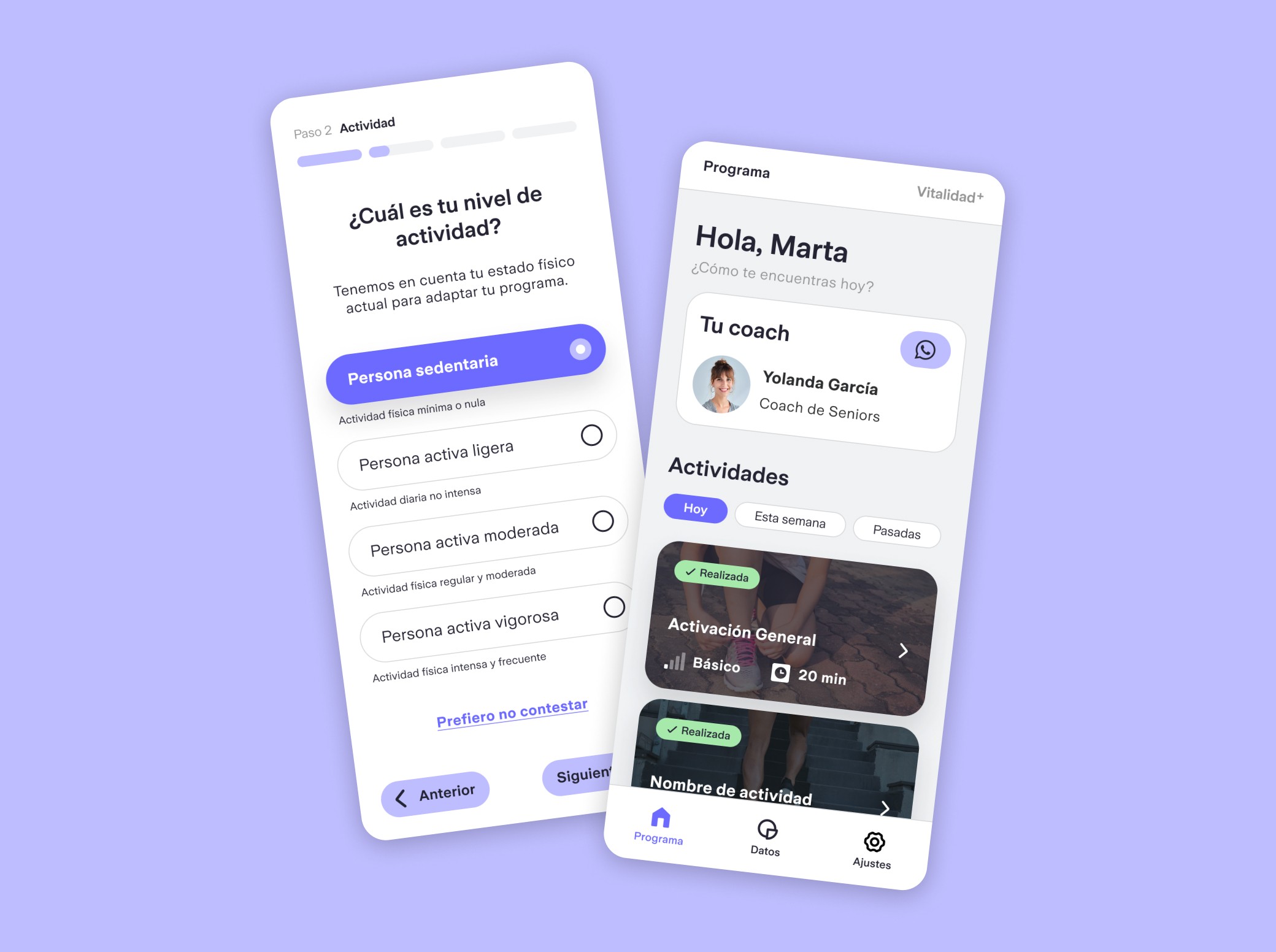
Healthcare experience is not just another kind of experience.It is shaped by uncertainty, vulnerability, and the need for trust.
In recent years, the healthcare sector has evolved significantly: service digitalisation, new models of care, rising demand, and higher expectations from patients and users.
However, many healthcare systems are still designed around organisational logic rather than people’s real experiences.
In this context, the challenge is not only to improve processes or introduce technology, but to design healthcare services that are more human, coordinated, and easier to understand.
Strategic design helps address this complexity by connecting needs, systems, and decisions to improve both the experience and the way the system works.
This means working on patient experience, healthcare service design, and UX improvement in health.
Challenges and pain points in the healthcare sector
The healthcare sector faces a combination of structural complexity and human sensitivity that directly impacts the experience:
In healthcare, problems are not only operational: they are deeply human.
We help organisations to:
Understand the real experience of patients, professionals, and carers in vulnerable contexts
Identify friction points throughout the care journey and their impact
Design services that are clearer, more accessible, and more people-centred
Improve coordination between actors, services, and moments within the process
Integrate digital solutions coherently into the overall experience
Align system needs with the real needs of people
Rather than optimising isolated processes, we approach healthcare as a system where every interaction affects the care experience.
If you are working on any of these challenges in the healthcare field, we can help you analyse them in more detail and identify where the main opportunities lie.
When a healthcare organisation needs strategic design
A healthcare organisation typically turns to this kind of approach when it:
Wants to improve the patient experience
Detects coordination issues between services
Is looking to design clearer healthcare services
Wants to integrate digital solutions into the experience
Needs to improve care pathways
How we work
We address healthcare challenges by combining research, strategy, and design as part of a continuous process, not as isolated phases, in contexts where system complexity and the human dimension are deeply connected.
Our process is structured around five key moments:
01
Understanding the context
02
Research
03
Strategic definition
04
Solution design
05
Iteration and implementation
How this work takes shape in the healthcare sector
In our work with healthcare organisations, these approaches are translated into projects that directly address the experience of both patients and professionals.
For example, we work in contexts such as:
Redesigning care pathways to improve coordination and reduce uncertainty
Improving key services such as appointments, communication, or follow-up
Integrating digital solutions into more coherent experiences
Designing services centred on patients and carers
Improving the day-to-day experience of professionals
Simplifying complex processes to make them easier to understand
Each of these projects is approached with the understanding that in healthcare, experience is not only functional, but also emotional and contextual.
We have worked on these kinds of challenges through strategic research, service design, and value proposition definition in different healthcare contexts.
Our approach
At Ikigai, we work from a strategic and systemic design perspective, understanding that healthcare is a complex system involving multiple actors, decisions, and moments.
We apply Life-Centered Design principles, expanding the focus beyond the user to consider the impact of solutions on:

People in vulnerable situations

Professionals and their ability to act

The system as a whole
This allows us to design services that are more human, coordinated, and sustainable.